Software Singularity
The End of Verticalized Software: Platform convergence theory
Published: Dec 23, 2025 | Author: System32 AI Labs | Reading
time: ~12 min
toc.md
Table of Contents
Click any section to jump directly to it
idea.md
The Software Singularity Thesis
For decades, enterprises have been trapped in a cycle of vendor proliferation. Need CRM? Buy Salesforce. Need project management? Get Jira. Analytics? Tableau. Marketing automation? HubSpot. The list goes on.
Each vertical problem demanded its own specialized software, its own vendor relationship, its own integration headaches. The enterprise software landscape became a fragmented maze of point solutions, APIs, and middleware trying desperately to make everything talk to each other.
LLMs, AI and Agents are making this obsolete.
The Software Singularity is the convergence point where AI-powered agent code generation eliminates the need for verticalized software solutions. Instead of multiple vendors solving different problems, you need just one platform, one vendor to address countless use cases across multiple stakeholders.
waves.md
Two Waves of Software Convergence
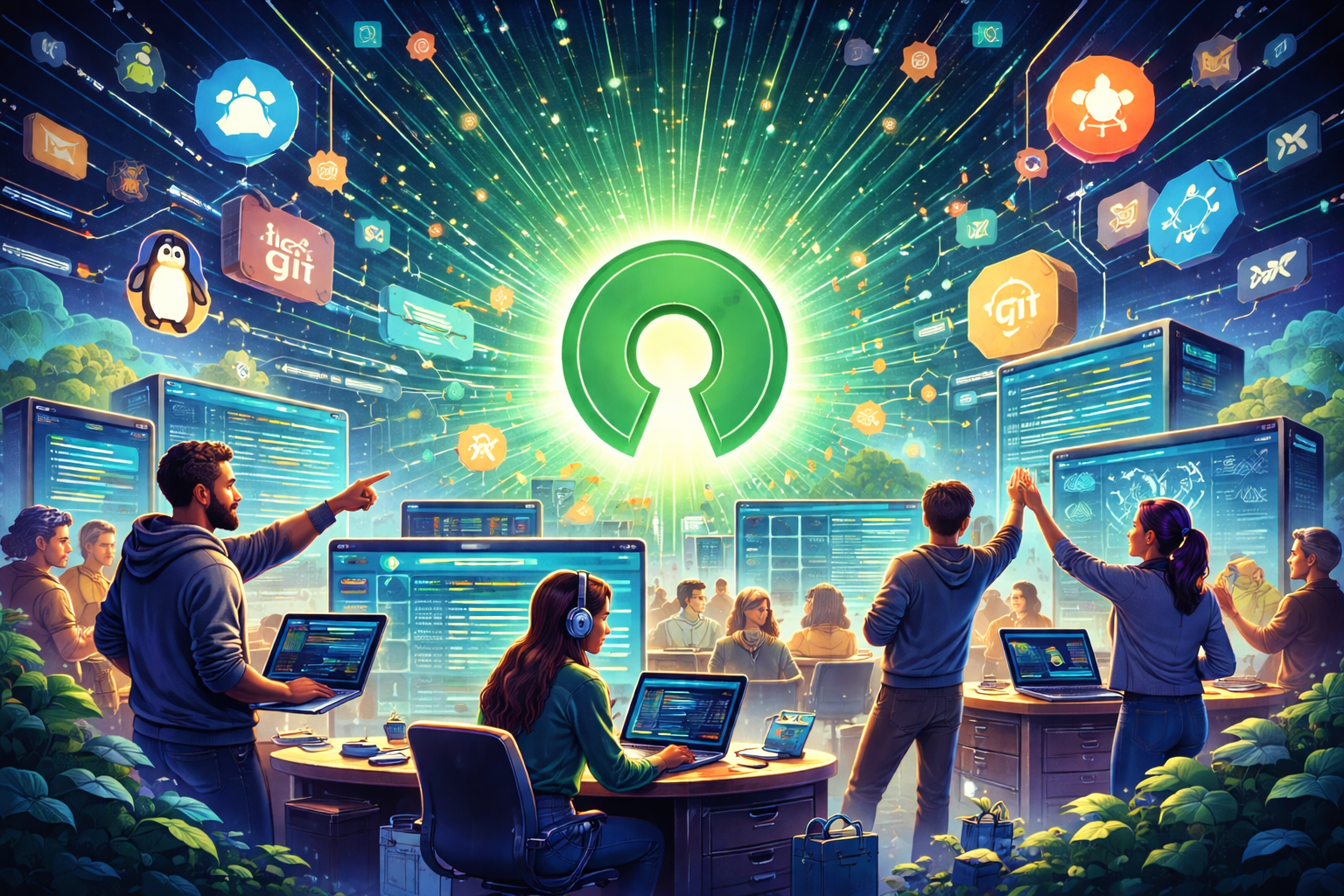
The First Wave: Open Source Convergence
The late 1990s and early 2000s marked the first great convergence in software history. Before this period, enterprises ran on proprietary stacks from single vendors—IBM mainframes, Oracle databases, Microsoft Windows servers. Each vendor controlled their entire ecosystem, creating walled gardens that locked customers into expensive, inflexible solutions.
Open source changed everything:
| Before Open Source | After Open Source |
|---|---|
| Operating Systems | Windows monopoly → Linux choice |
| Databases | Oracle dominance → PostgreSQL/MySQL options |
| Web Servers | IIS monopoly → Apache/Nginx freedom |
| Development Tools | Vendor lock-in → GCC, Python, Ruby ecosystems |
What Open Source Enabled
Open source broke vendor monopolies by providing commodity alternatives to proprietary software. This created choice, reduced costs, and accelerated innovation:
• Cost Reduction: Free alternatives to expensive proprietary software
• Freedom of Choice: Mix-and-match components from different vendors
• Community Innovation: Rapid evolution through global collaboration
• Standards Emergence: Common protocols and APIs became the norm
The result? The LAMP stack (Linux, Apache, MySQL, PHP) became the foundation for the modern web, powering everything from startups to Fortune 500 companies. Enterprises could now build custom solutions without being locked into single-vendor ecosystems.
The Second Wave: AI-Powered Convergence
While open source converged infrastructure and tools, it didn't eliminate the need for verticalized business applications. You still needed separate software for CRM, ERP, HR, marketing automation, and dozens of other business functions.
Software Singularity represents the second convergence wave, where AI agent code generation eliminates the need for these vertical applications entirely:
First Wave vs Second Wave
First Wave (Open Source):
• Converged infrastructure and development tools
• Reduced costs for commodity software
• Enabled custom web applications
• Still required vertical business software
Second Wave (AI Singularity):
• Converges all business applications into one platform
• Eliminates need for verticalized software entirely
• Generates custom solutions on-demand
• One platform solves infinite business problems
• Converged infrastructure and development tools
• Reduced costs for commodity software
• Enabled custom web applications
• Still required vertical business software
Second Wave (AI Singularity):
• Converges all business applications into one platform
• Eliminates need for verticalized software entirely
• Generates custom solutions on-demand
• One platform solves infinite business problems
Why AI Makes This Possible Now
Open source convergence was enabled by the internet and collaborative development. Software Singularity is enabled by three AI breakthroughs:
1. Code Generation at Scale
Modern LLMs can generate production-quality code from natural language descriptions, making application development accessible to non-programmers.
2. Secure Sandboxed Execution
Containerization and serverless computing allow multiple generated applications to run simultaneously in isolated, secure environments.
3. Dynamic Resource Orchestration
Cloud platforms can spin up and tear down environments instantly, enabling pay-for-what-you-use economics for generated applications.
The Historical Parallel
Just as open source democratized infrastructure and enabled the web revolution, AI-powered code generation will democratize application development and enable the next revolution in business software.
The first wave gave us the tools to build custom web applications.
The second wave will give us the tools to build custom business applications for every conceivable use case.
The enterprise software landscape is about to undergo its most profound transformation since the open source revolution began.
how-it-works.md
Why This Changes Everything
The Traditional Model is Broken
Today's enterprise operates like this:
• Sales team uses Salesforce ($150/user/month)
• Marketing uses HubSpot ($800/month)
• Engineering uses Jira ($7/user/month)
• Finance uses NetSuite ($999/month)
• HR uses Workday ($custom pricing)
• Support uses Zendesk ($49/agent/month)
That's 6+ vendors, 6+ contracts, 6+ integration projects, 6+ security audits, 6+ training programs. The hidden cost? Astronomical. The integration complexity? Nightmarish.
The Singularity Model
With AI agent code generation, a single platform can:
• Generate custom applications on-demand for any business process
• Adapt to stakeholder needs in real-time without new software purchases
• Execute code in isolated, secure environments for each use case
• Scale infinitely without vendor lock-in or per-seat pricing
The platform doesn't just integrate systems—it becomes every system you need.

example.md
How It Works in Practice
Scenario: Marketing Team Needs a Custom Campaign Analyzer
Old Way (Multiple Vendors):
1. Buy HubSpot Marketing Hub ($800/month)
2. Add analytics plugin ($200/month)
3. Integrate with data warehouse (weeks of dev time)
4. Train team on new interface (days)
5. Wait for feature requests (months)
Singularity Way (One Platform):
# Marketing manager describes what they need system32 flow init "Analyze email campaign performance across segments, predict best send times, generate automated A/B test recommendations" # Platform generates custom agent in seconds > Generating specialized marketing analytics agent... > Creating isolated execution environment... > Connecting to data sources... > ✓ Agent deployed and readyThe platform:
• Generates the exact tool the marketing team needs
• Executes in isolated sandbox for security
• Adapts to new requirements through natural language
• No new vendor contracts needed
Multiple Stakeholders, One Platform
The same platform serves:
Sales Team: Custom CRM workflows, lead scoring, proposal generation
Engineering: Project tracking, code analysis, deployment automation
Finance: Report generation, forecasting models, compliance checks
HR: Applicant screening, onboarding workflows, performance analytics
All without buying separate software for each function.
The Technical Foundation: Why This is Possible Now
Three technological advances make Software Singularity viable:
1. AI Agent Code Generation
Modern LLMs can generate production-quality code from natural language descriptions. This means applications can be created on-demand, tailored to exact specifications.
2. Isolated Execution Environments
Secure sandboxing (via Kubernetes, containers, VMs) allows multiple generated applications to run simultaneously without interference, each in its own isolated environment.
3. Dynamic Resource Allocation
Cloud infrastructure enables instant scalingu2014spin up environments when needed, tear them down when done. Pay only for what you use.
The Platform Architecture
u2022 Natural Language Interface - Stakeholders describe needs in plain English
u2022 AI Code Generator - Creates custom agents and applications
u2022 Sandboxed Execution Layer - Runs code in isolated, secure environments
u2022 Resource Orchestration - Manages lifecycle and scaling automatically
u2022 Unified Data Layer - Single source of truth across all use cases
u2022 AI Code Generator - Creates custom agents and applications
u2022 Sandboxed Execution Layer - Runs code in isolated, secure environments
u2022 Resource Orchestration - Manages lifecycle and scaling automatically
u2022 Unified Data Layer - Single source of truth across all use cases
Platform Capabilities
| Use Case | Traditional Approach | Singularity Approach | Time to Deploy |
|---|---|---|---|
| Custom CRM | Buy Salesforce + Customize | Generate custom agent | Weeks → Minutes |
| Data Analytics | Tableau + Training | Describe report, get agent | Days → Seconds |
| Workflow Automation | Zapier + Integrations | Natural language workflow | Hours → Instant |
| Custom Tool | Custom Development Team | AI-generated solution | Months → Hours |
The Implications
For Enterprises:
• Reduce software spending by 60-80%
• Eliminate integration hell
• Deploy custom solutions in hours, not months
• One vendor relationship, infinite capabilities
For Software Vendors:
• Vertical SaaS companies face existential risk
• The moat isn't features anymore—it's the platform
• Winner-take-most dynamics emerge
• Traditional customization dies
For Developers:
• Building integrations becomes obsolete
• Focus shifts to platform capabilities, not vertical solutions
• AI becomes the primary development interface
The Singularity Moment
We're at the inflection point where maintaining dozens of vertical software vendors
becomes more expensive and complex than adopting a single AI-powered platform that
generates custom solutions on demand.
The technology exists today. The economic imperative is clear. The only question is which platform will become the standard for enterprise software convergence.
savings.md
Total Savings: The Economic Impact
The Hidden Costs of Vertical Software
Most enterprises dramatically underestimate their total software costs. Beyond license fees, there are integration, maintenance, training, and opportunity costs that multiply expenses by 3-5x.
Cost Breakdown for a 100-Person Company
| Software Category | Annual License Cost | Integration & Setup | Training & Support | Total Annual Cost |
|---|---|---|---|---|
| CRM (Salesforce) | $180,000 | $50,000 | $30,000 | $260,000 |
| Marketing (HubSpot) | $9,600 | $25,000 | $15,000 | $49,600 |
| Project Mgmt (Jira) | $8,400 | $15,000 | $10,000 | $33,400 |
| Finance (NetSuite) | $11,988 | $40,000 | $25,000 | $76,988 |
| HR (Workday) | $120,000 | $60,000 | $40,000 | $220,000 |
| Support (Zendesk) | $5,880 | $20,000 | $12,000 | $37,880 |
| TOTAL ANNUAL COST | $335,868 | $210,000 | $132,000 | $677,868 |
The Singularity Savings
With a single AI-powered platform, the same company could achieve all these capabilities for a fraction of the cost:
Annual Savings: $540,000+
67% reduction in total software costs
$677,868 → $137,868 annual expenditure
$4.5M saved over 5 years
$677,868 → $137,868 annual expenditure
$4.5M saved over 5 years
Beyond Direct Costs: The Multiplier Effect
The savings extend far beyond license fees:
Time Savings:
• Integration Projects: 6 months → 1 week per new capability
• Training Programs: 20 training sessions → 1 platform tutorial
• Feature Requests: 3-month wait times → instant deployment
Productivity Gains:
• Employees spend 20% less time on software-related tasks
• IT teams focus on innovation instead of maintenance
• Business users get custom tools instantly
Risk Reduction:
• Single vendor relationship eliminates vendor management complexity
• Unified security model reduces attack surface
• No more integration failures or data silos
Total Economic Value
• Direct Cost Savings: $540,000/year (67% reduction)
• Productivity Gains: $200,000+/year (20% efficiency increase)
• Risk Mitigation: $50,000+/year (reduced downtime/costs)
• Opportunity Cost: $300,000+/year (faster innovation)
Total Annual Value: $1.09M+
• Productivity Gains: $200,000+/year (20% efficiency increase)
• Risk Mitigation: $50,000+/year (reduced downtime/costs)
• Opportunity Cost: $300,000+/year (faster innovation)
Total Annual Value: $1.09M+
The ROI Timeline
| Time Period | Cumulative Savings | ROI Multiple |
|---|---|---|
| Year 1 | $540,000 | 2.7x |
| Year 2 | $1,080,000 | 5.4x |
| Year 3 | $1,620,000 | 8.1x |
The Bottom Line
Software Singularity doesn't just reduce costs—it transforms how enterprises operate. By eliminating the need for dozens of vertical software vendors, companies can redirect millions in annual spending toward innovation, growth, and competitive advantage.
The platform that enables this convergence won't just capture market share—it will redefine the software industry entirely.
what-we-build.md
What We're Building
At System32, we're building the foundation for this future:
• Sandboxed - Secure, isolated execution environments for AI-generated code
• Flow - Agent orchestration framework for complex workflows
• Unified Platform - One interface for infinite use cases
The vertical software era is ending. The platform era is beginning.
→ Request a demo
═══════════════════════════════════════════════════════════════════════════════════